Surface EMG — Knowledge Base
Everything you need to understand what the muscle pages say — electrode placement, signal quality, processing, analysis. Each article names its sources and links to the muscles it applies to.
Start here
Three reading paths, three articles each, about 20 minutes.From the first electrode to a reproducible measurement
- EMG Electrode Placement — The Practical Guide9 min
- Why the Electrode Must Not Sit on the Innervation Zone6 min
- MVC Normalisation — Why Microvolts Alone Say Nothing6 min
Which number answers which training question?
- Can I Measure This Muscle With Surface EMG?8 min
- EMG Parameters — Which Number Answers Which Question6 min
- 10 Factors That Distort Your EMG Signal7 min
From raw signal to value, with every term explained
- Specific, Quasi-Specific, General — The Three Types of Surface EMG Placement6 min
- From Raw EMG to RMS — Rectification, Smoothing and Filtering Explained5 min
- Surface EMG Glossary15 min
Electrode placement
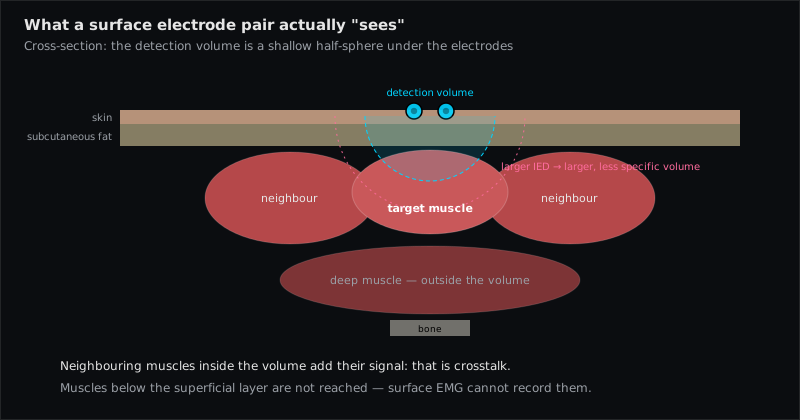
Can I Measure This Muscle With Surface EMG?
Interactive check for 68 muscles: specific, quasi-specific or surface-recordable — or fine-wire only. Based on Cram's grades, SENIAM and the EMG Guide catalogue.
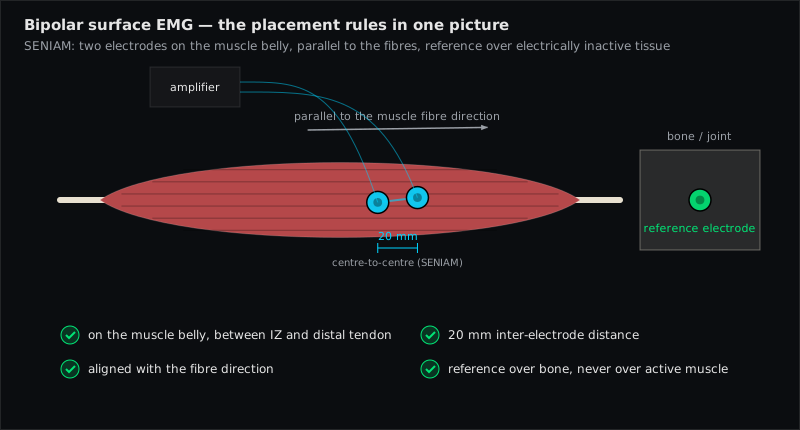
EMG Electrode Placement — The Practical Guide
How to place surface EMG electrodes correctly — SENIAM rules, skin prep, 20 mm spacing, fibre direction, reference electrode, signal check and common mistakes.

EMG vs. EMS — Why the Electrode Positions Are Not the Same
EMG records, EMS/NMES stimulates: why stimulation pads target the motor point and EMG electrodes avoid it — and why an EMG placement guide is not an EMS pad chart.
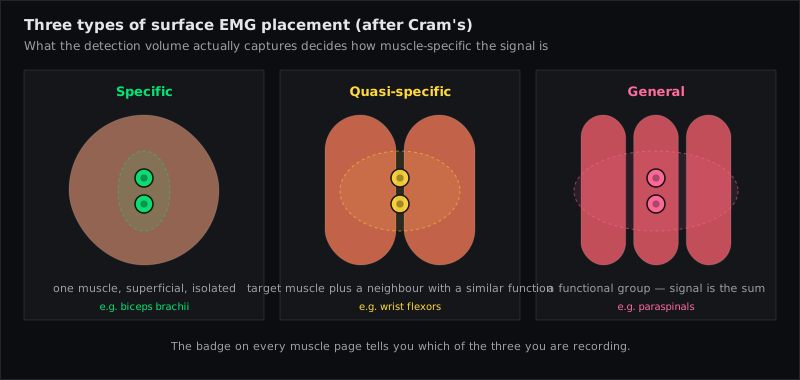
Specific, Quasi-Specific, General — The Three Types of Surface EMG Placement
Why there is no single correct electrode position — Cram's three placement types, what each records, where SENIAM fits, and what it means for interpretation.
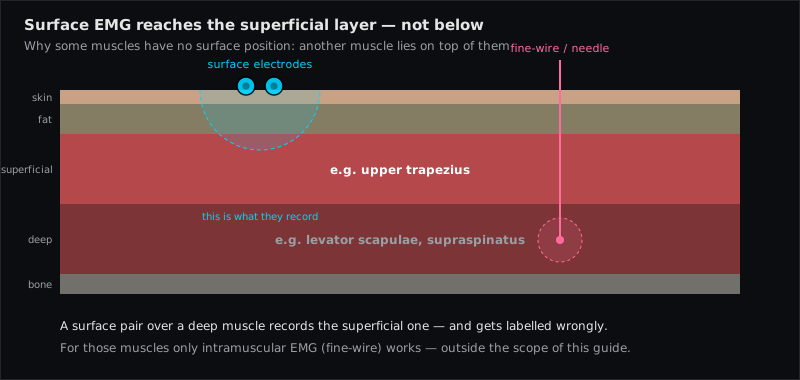
Which Muscles Cannot Be Measured With Surface EMG — and Why
Iliopsoas, supraspinatus, rhomboids, levator scapulae … why surface electrodes cannot record deep or covered muscles, what you record instead, and the alternatives.
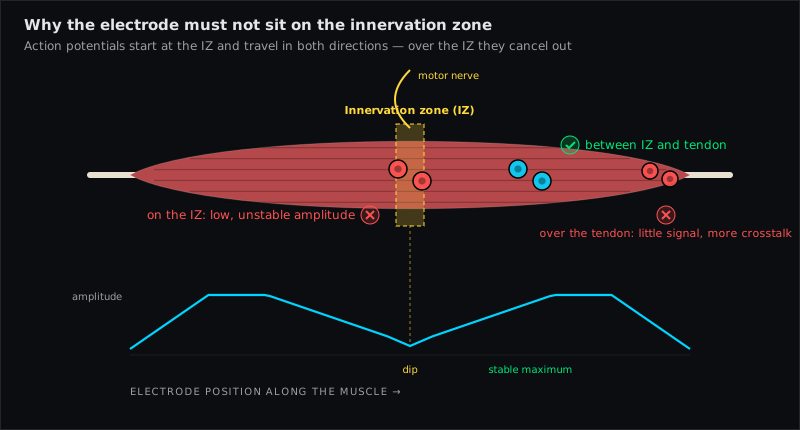
Why the Electrode Must Not Sit on the Innervation Zone
What the innervation zone is, why a bipolar pair over it gives small, unstable EMG amplitudes, how SENIAM avoids it, notorious muscles, and how to spot it.
Signal quality
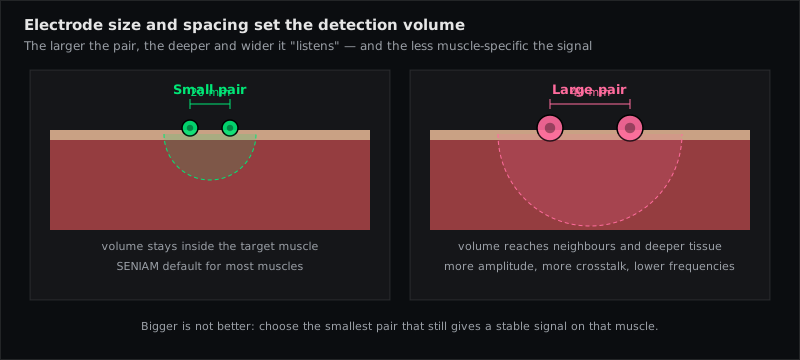
10 Factors That Distort Your EMG Signal
Skin, fat, temperature, spacing, innervation zone, crosstalk, ECG, motion, cables, fatigue — ten influences that change an EMG amplitude, and how to control each.
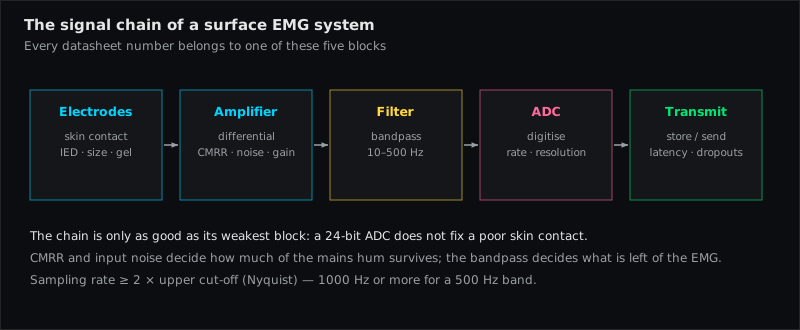
What the Datasheet of an EMG Sensor Really Tells You
Input impedance, CMRR, noise floor, bandwidth, sampling rate, resolution — what each spec means and which values SENIAM and Cram's call adequate.
Processing & analysis
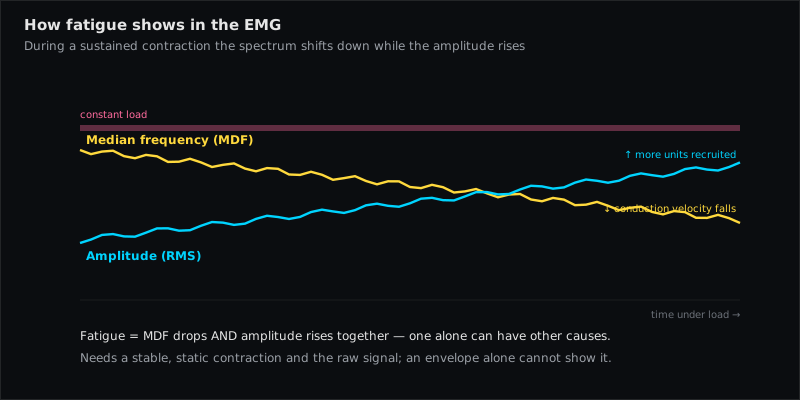
EMG Parameters — Which Number Answers Which Question
On/off, more/less, timing, how much, fatigue, coordination — Konrad's six analysis questions and the EMG parameter that answers each, with the typical traps.
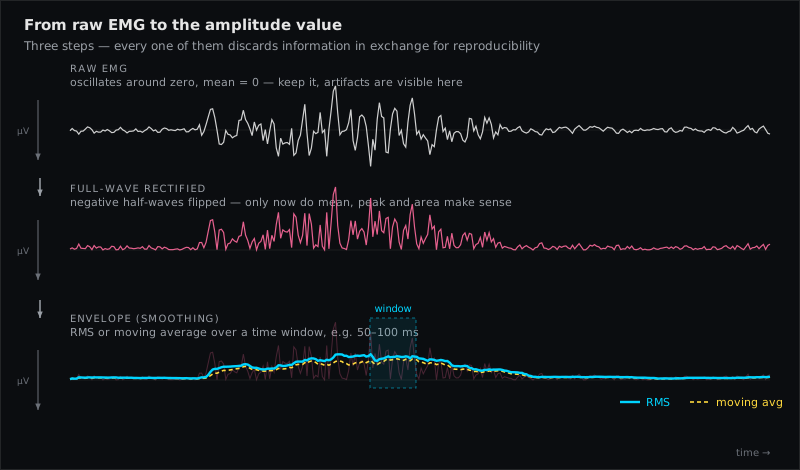
From Raw EMG to RMS — Rectification, Smoothing and Filtering Explained
What happens between the raw EMG trace and the amplitude number: rectification, moving average vs. RMS, window length, notch filters.
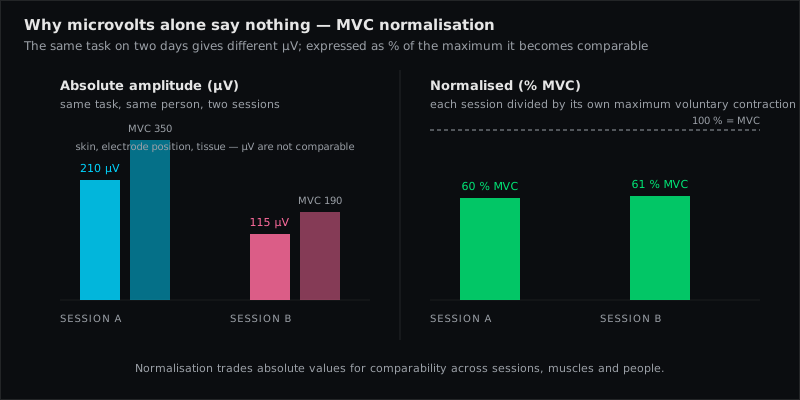
MVC Normalisation — Why Microvolts Alone Say Nothing
How to normalise surface EMG to a maximum voluntary contraction (MVC/MVIC), how to run the reference test, when MVC fails, and the alternatives.
Reference
SENIAM Electrode Positions — All 26 Muscles at a Glance
All SENIAM electrode placement recommendations in one table: position, orientation and test movement for 26 muscle pairs.
Surface EMG Glossary
54 terms of surface electromyography explained in one sentence each — from amplitude cancellation to volume conduction. With sources (SENIAM, Cram's, Konrad).